
Timberborn (Early Access)
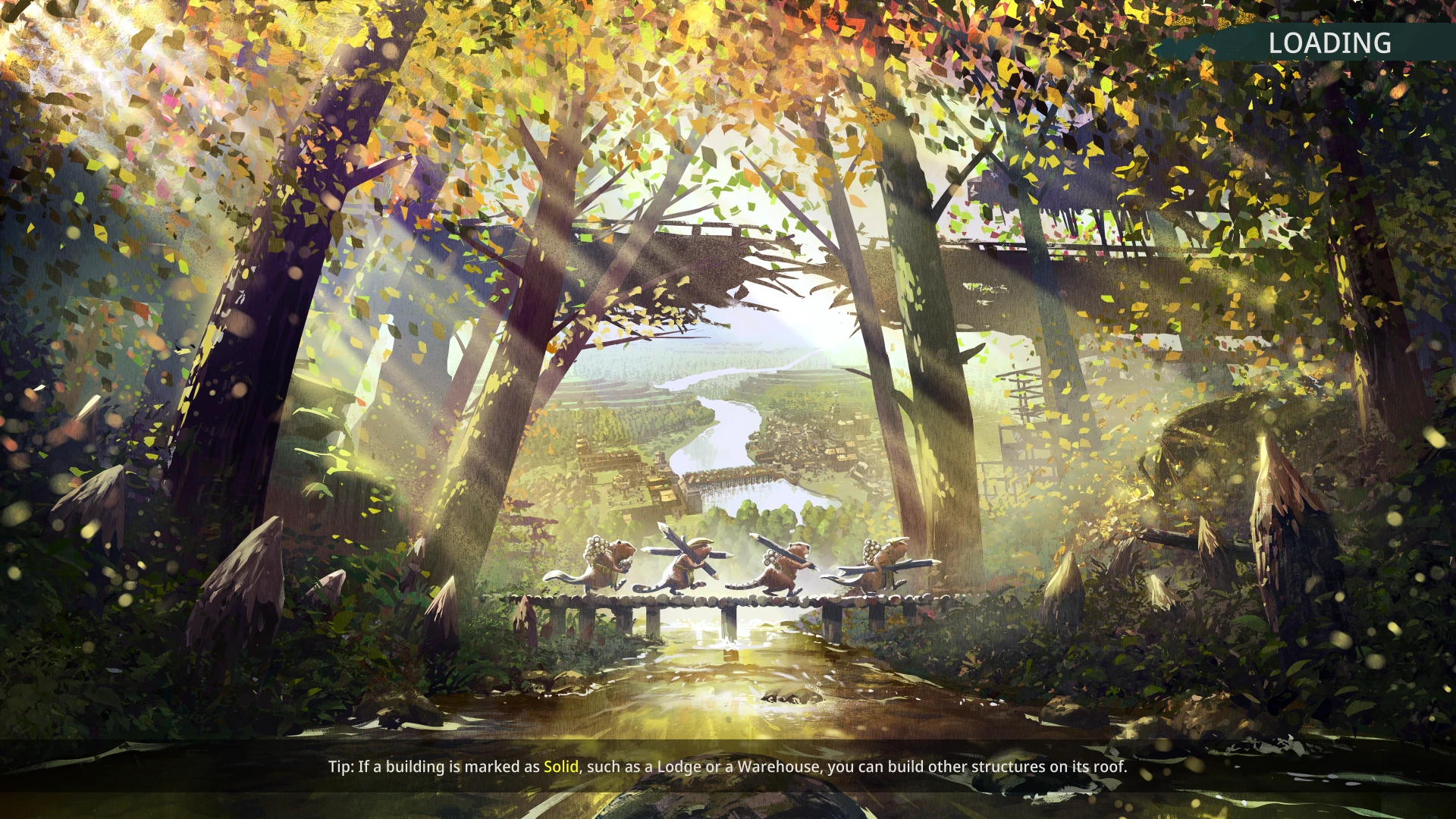
Timberborn is a charming city-builder developed and published by Mechanistry and released as early access in 2021. Released for PC and macOS so far, Timberborn was built in the Unity engine and has been enjoying periodic updates as it makes it way to a full release. Timberborn is a charming city-builder developed and published by Mechanistry and released as early access in 2021. Released for PC and macOS so far, Timberborn was built in the Unity engine and has been enjoying periodic updates as it makes it way to a full release.
The game has received a resoundingly positive reception with tens of thousands of overwhelmingly positive reviews on steam and numerous awards already under its belt. The game centers around the players colony of evolved beavers as they create their colony on various maps. Leaning into its beaver theme the player needs to control the supply of water on the map by building dams and reservoirs.
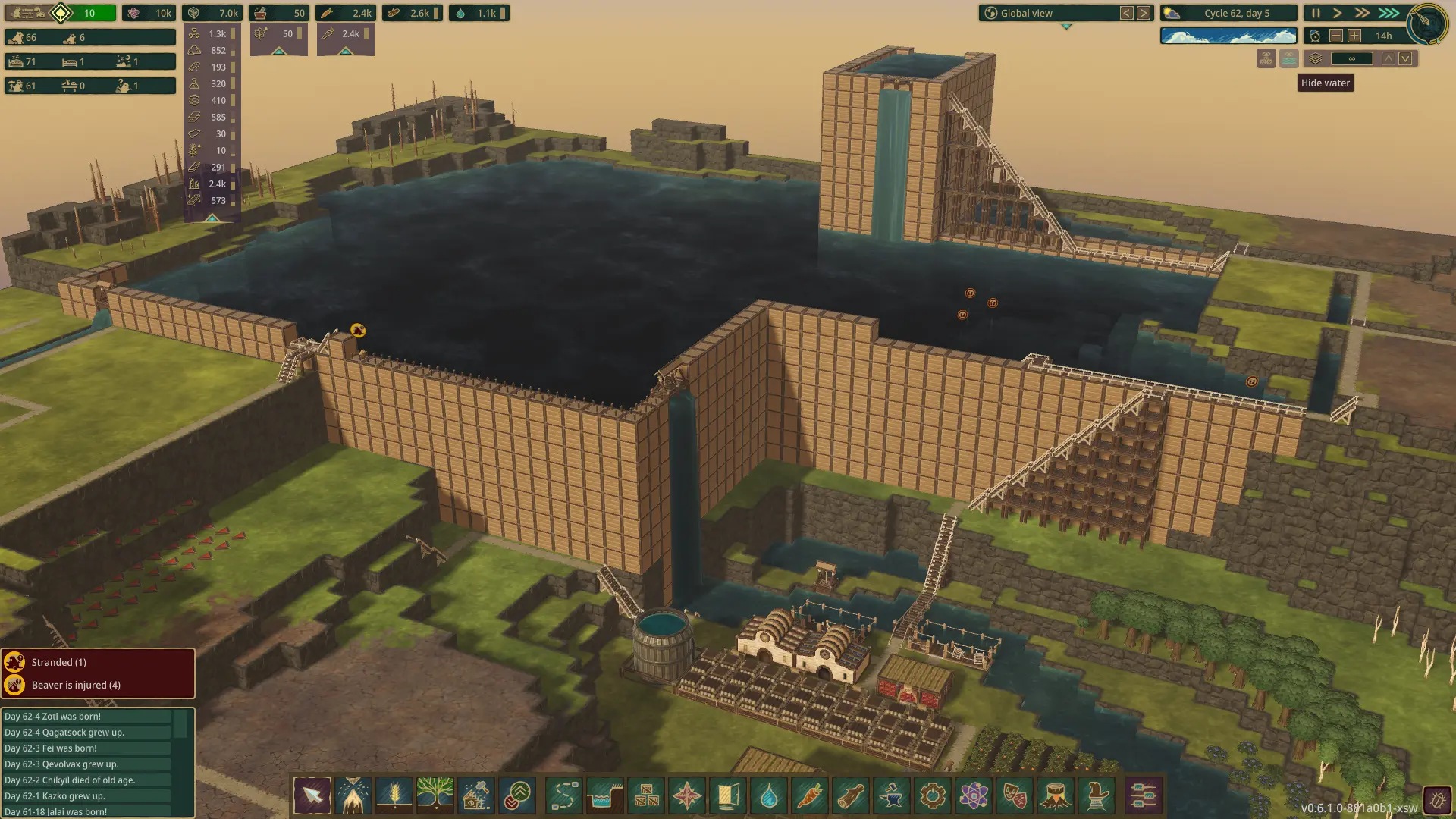
I had intended to delve into the mechanism of soil moisture system but it isn’t really all that intuitive to demo without a matching terrain system. So since the game is currently in early access and still being developed I’ll put in my two cents about features I’d like to see.
Timberborn comes with the regular set of base building tropes like roads, resource gathering, and farming but the real mechanically innovative part is the water. Timberborn is voxel based but has a fluid system (3D fluid simulation as of a Update #6) that combination allows for realistic flow of fluid over the terrain. The player can lay down new voxel blocks to control the flow of water to control the flow of water into new waterways, basins, and reservoirs. Players can establish complex waterways to feed farms, potable water, and power water wheels. Thy can also conduct research to unlock new buildings and ways to manipulate the environment, build up their beaver community and improve morale and productivity. Moral is a pretty significant mechanics that increased walking speed, life expectancy and work speed. Unfortunately the game doesn’t always transfer this information to the player.
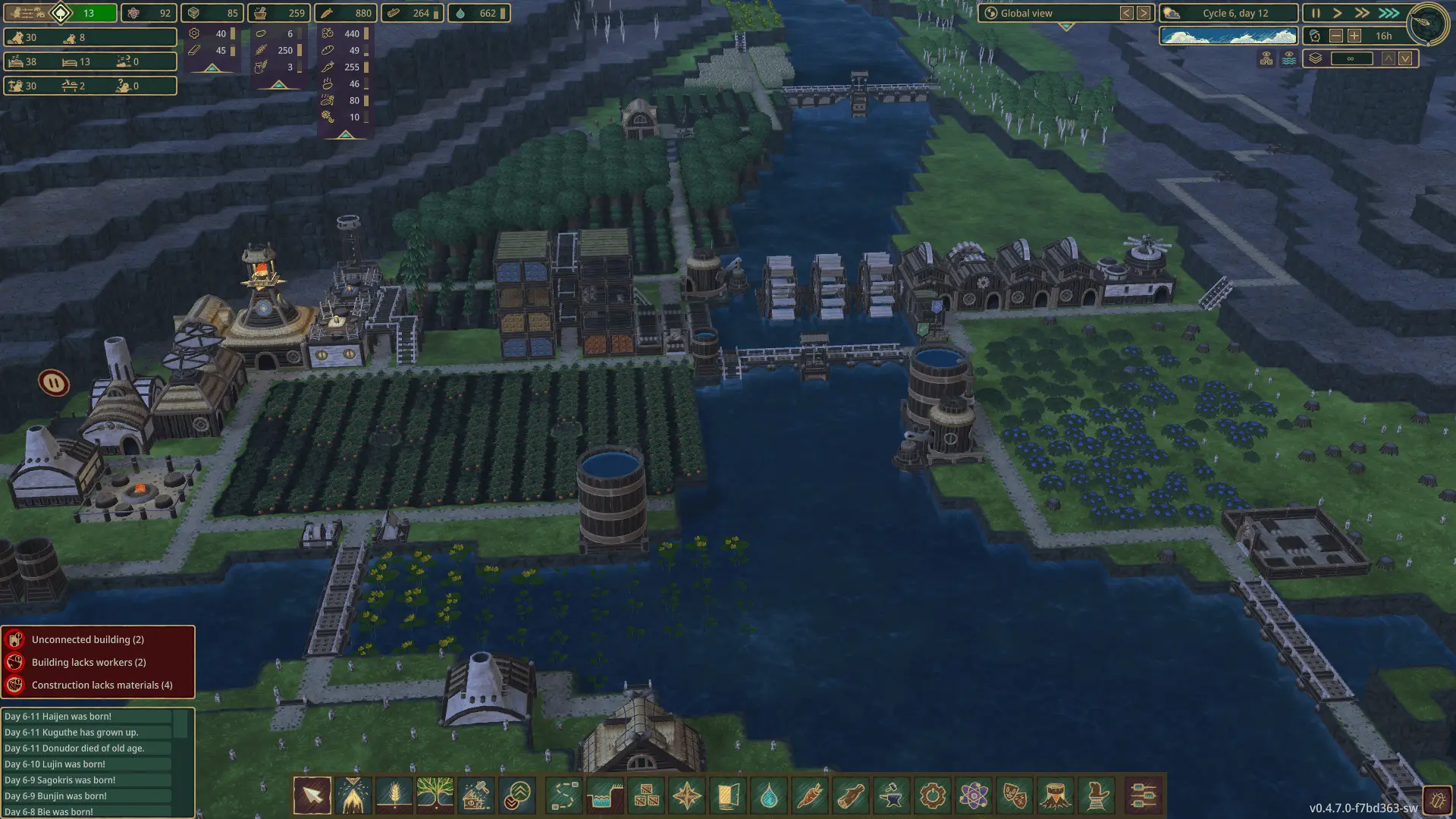
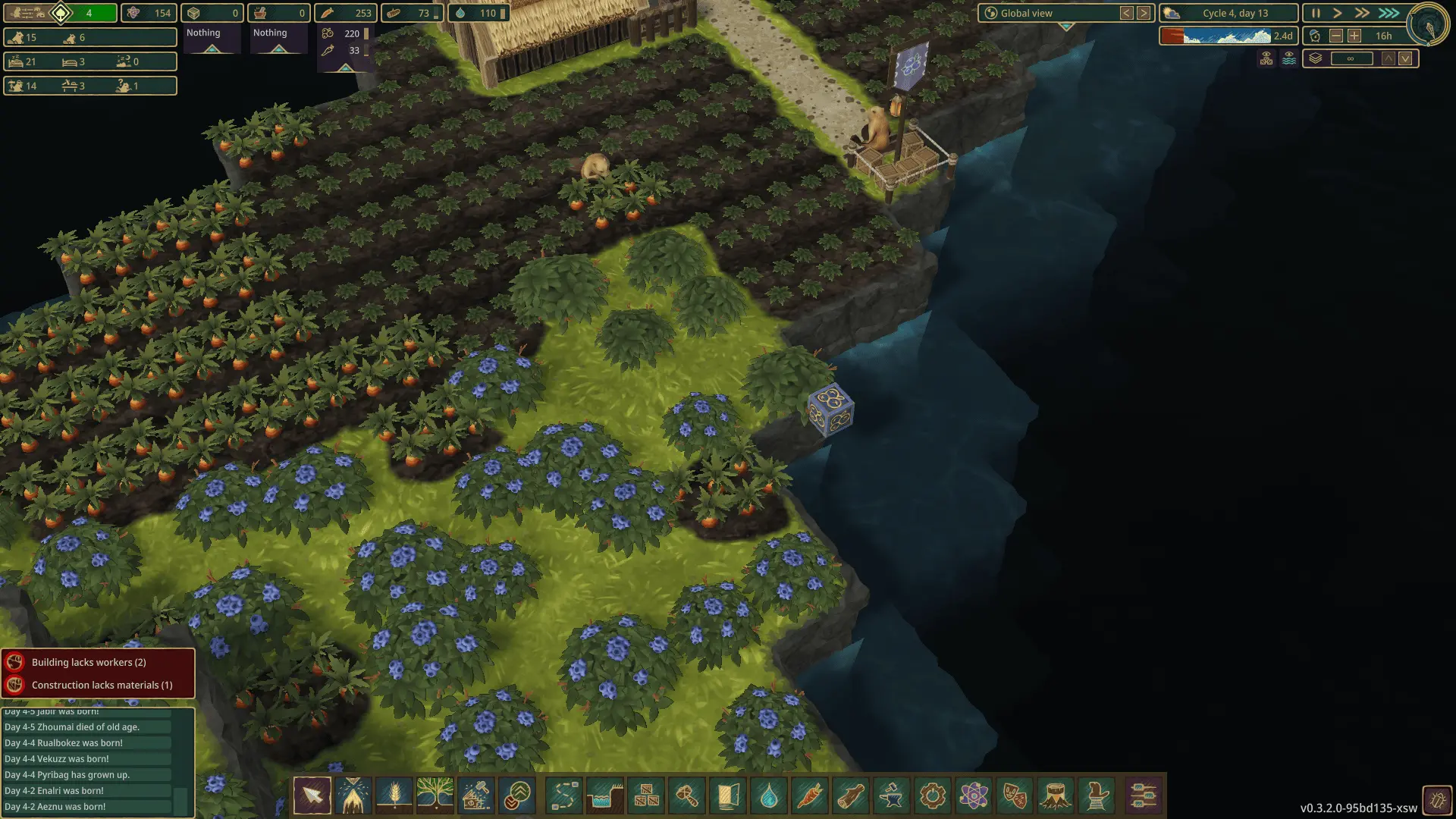
The tutorial is hopefully in an incomplete state. The tutorial system is straight forward and easy to use but is out of date and stops before it covers districts; a rather large part of the game, and skips many systems outright. I can’t really hold this against the game though since districts is a feature that is continually evolving.
Between the various maps, the different beaver factions, the growing collection of mods and the open ended nature of city builders, Timberborn has a fair amount of value in terms of replayability. Since every map can be completed on any number of custom difficulties players can challenge themselves how the like. So far there are only two factions; Forktails and Iron Teeth that provide different dynamics through their different faction building.
To keep the players colony alive the need a constant supply of food and potable water. This fact is complicated by the intermittent droughts, evaporation, and various other challenges. The construction dynamic of Timberborn is focused on capturing water and controlling its flow. This dynamic isn’t limited to simple blocks and buildings, players can setup mechanical powers systems, divide the map into separate districts, manufacture goods, create monuments, beautify their colony, and improve their beavers lives.


The game benefits greatly from its bright and cheerful atmosphere and the generally charming nature of the premise. The beavers are plucky and adorable, each one name and character card with their metadata and moral values.
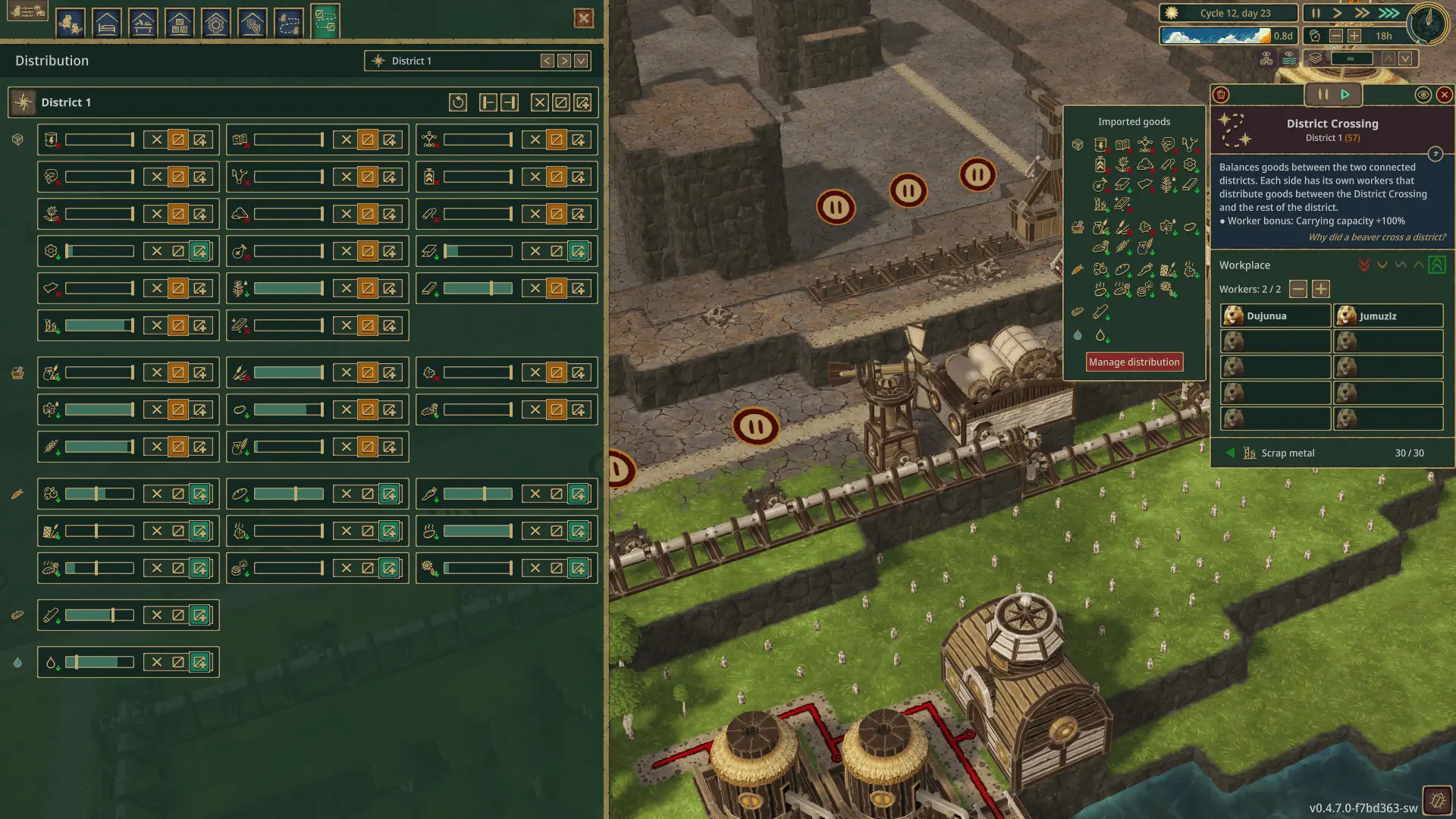
The user interface is quite compact given the amount of information on display. Resource tabs are collapsible, the day and weather forecasting is succinct and easy to read at a glance. Almost everything has hover over tool tips. The larger block icons (like the building icons) have a nice wood cut block visual that fits great with the theme. The research/upgrade U.I is artfully merged with the building U.I’s. The more complex U.I’s like Distribution and Well-being are a little more hit or miss.
The voxels are well textured with the top surface texture being dynamically generated to reflect the soil moisture which is pleasant to watch as water flows around the map, the terrain morphing from dry cracked hard scrabble dirt to verdant grasslands.
The game performs quite well in general there is noticeable performance drops as the amount of functional voxels on the map and the number of beavers grows, especially on the largest map sizes. I would have though the water physics would be the heaviest drain on system resources but seems very well optimized in test with a lot of effort put into it. There’s still room for more optimization in other aspects.
The sound design is solid. There isn’t a vast array of SFX in the game though the developers went through the trouble of assigning most building types with a distinctive sound when selected. The music is a collection of sonorous lo-fi tracks, soft instrumental piano and woodwinds. The tracks change with the tides and while they are smooth and match the gameplay I can’t say they do much for me personally due to the way I play the game.
The game takes place in the aftermath of the extinction of humans. The land is littered with the remnants of skyscrapers and buried metal foundations. Beavers have since inherited the earth and are creating their own fledgling society. The game doesn’t make a big deal about this fact there is some lore in the form of short quotes in the building select U.I.
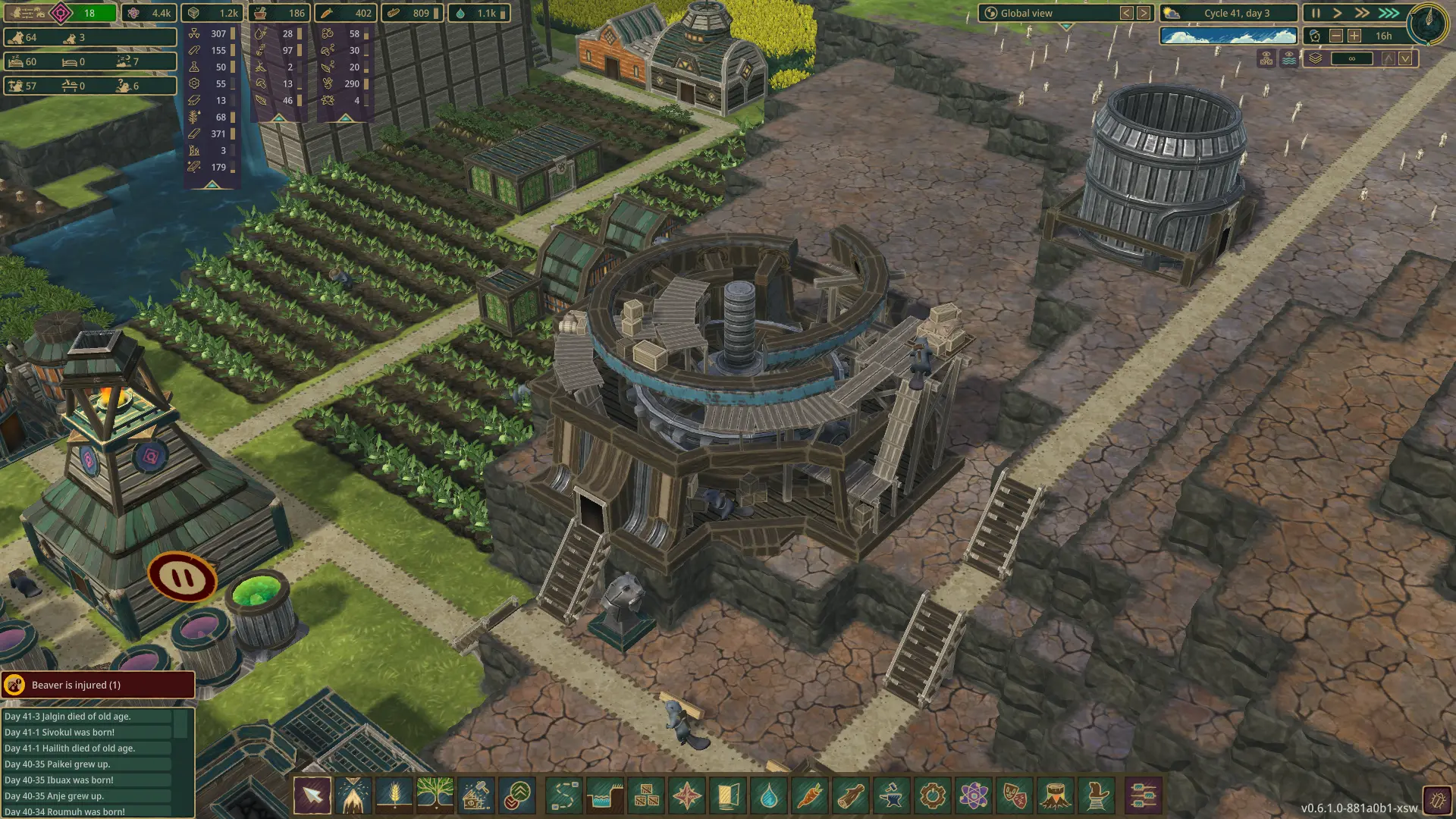
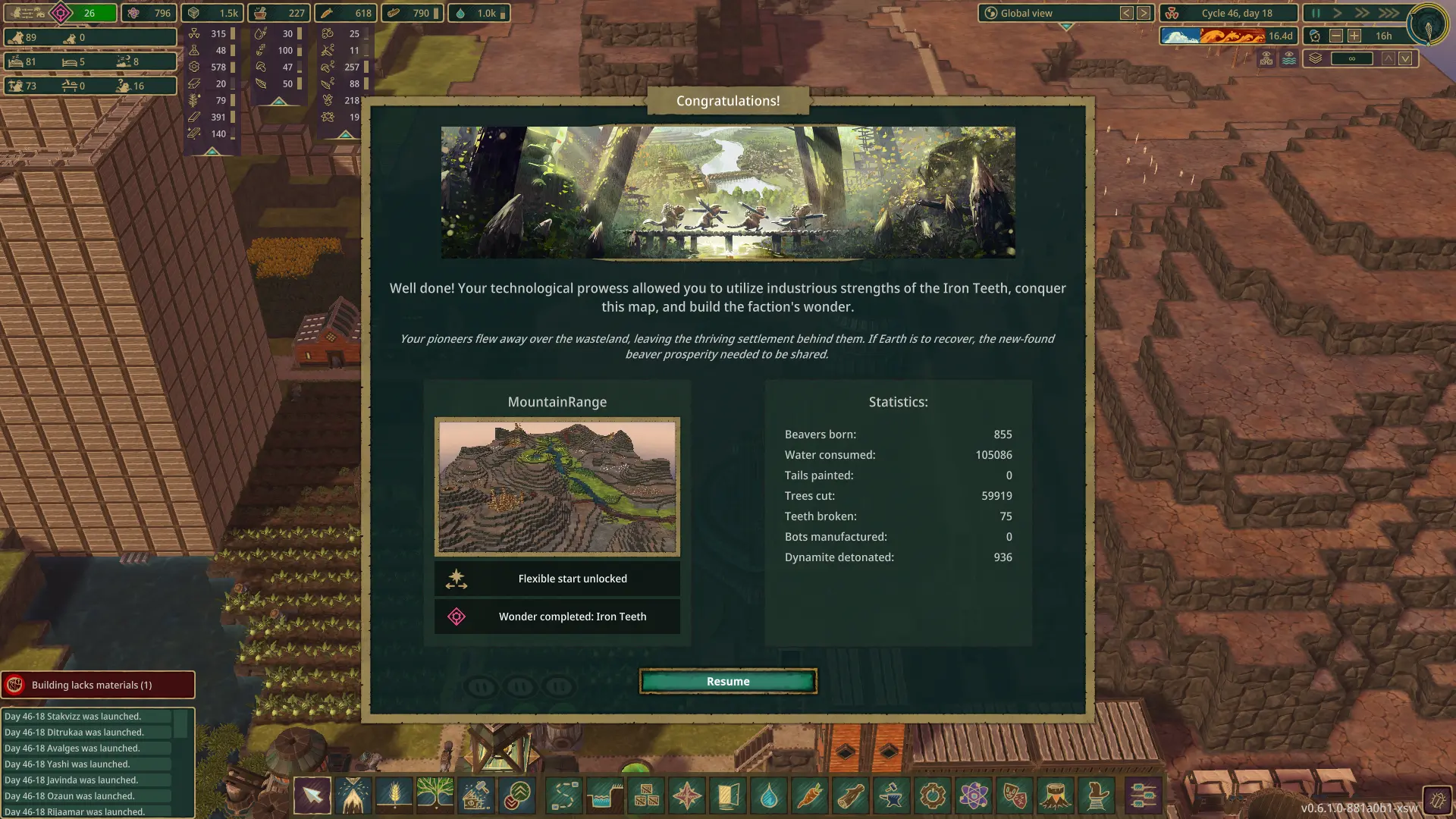
The game has a good pace, this is in part due to the fact that basic building materials have to be grown or gathered from far reaching parts of the map. Water becomes an increasingly scares over time as droughts get longer helping keep pressure on the player to expand. As of Update #6 there is an end goal in the form of an expensive Monument.
I’m not really sure what to compare this game to. At first blush it really does belong to city building and simulation genres but I can’t think of another game quite like it. The simulated water aspect alone is distinct enough to set it apart from other city builders.
As the game is still under development in early access there’s little to no extra content to speak of. It’s unclear if what additional content will eventually make it into the game’s final release or what might make its way into DLC. The only additional content is the game’s soundtrack. Mechanistry, released the game soundtrack separately which seem to be a growing trend for games especially in the indie scene. The game doesn’t have extra game modes unless you choose to count the alternate start locations as a mode.
I hope the game develops in ways I can’t even imagine and currently update #7 is out on the game’s experimental with zip lines and pneumatic tubes. That being said I’d be remiss if I didn’t put in my two cents while the game is still open to changes.
I wanted to open strong and suggest adding the ability to move cargo using the water ways like log drivers from the 1900’s but that seems technically complex to the point of it being unfeasible. The thinks I’d like to see most added and in no particular order.
More Factions
As of now there are only two factions available in the game, the Forktails and the Iron Teeth. I think a few more factions would fill out the game nicely. For one a faction that is more dependent on water; the Web Foots. They would have greater water consumption; the ‘wet fur’ attribute is a critical one like thirst and hunger. Special faction buildings would reflect this like a variant of the water wheel that generated potable water instead of power, the ability to clean bad tide into clean water, and houses that can be built in water (satisfying the ‘wet fur’ attribute.
Another faction in opposition to the Web Foots is the Rock Snouts. They’re need less water but make up for it in food consumption. Expert builders the Rock Snouts are adapted to a drier climate and their faction buildings reflect this, they use cranes to build at a distance, can excavate blocks by more easily, as well as growing crops in contaminated soil. Finally a faction; Castor Sapiens, which reflects a player’s mastery of the game by releasing all the faction buildings for use.
Auto Scaffolding
Building scaffolding seems ubiquitous enough to be its own feature. Being able to drag the stairs building and having the game create the appropriate platforms to accommodate that.
More Automation Controls
So far the sluice block is really the most logic intensive block with a measure of automation built in. I would like to see more logic and automation controls. Maybe the ability to toggle buildings on and off based on the current tide, disable pumps if water levels are over/under some value. Personally I’d like to have floodgates connected stream gauges so I can route water sequentially.
Encroaching Plants
Another way to press the games difficulty is to add hostile plant life. Timberborn already has self propagating plants so adding a plant variant that represents a growing hazard would be interesting. A creeping vine that grows and propagates up water ways. If the plants are left to reach maturity they form a block and potentially cause flooding.
More Uses for Research
After unlocking the last buildings research points become utterly useless. I don’t know what these points should be used but it irks me that they go totally unused in the late-game.